

· By Marketing Team
Why Your Pantry Needs 3 Types of Vanilla
Think vanilla is just one flavor? Think again.
We’ve become so used to vanilla being called ‘plain’, ‘safe’ or even ‘boring’ that we forget what a wildly complex ingredient it actually is. Vanilla contains hundreds of aroma compounds, which is why real vanilla can taste floral, fruity, warm, spicy, creamy, and even a little earthy and woody.
Sounds like it deserves a spot next to the black pepper? Definitely.
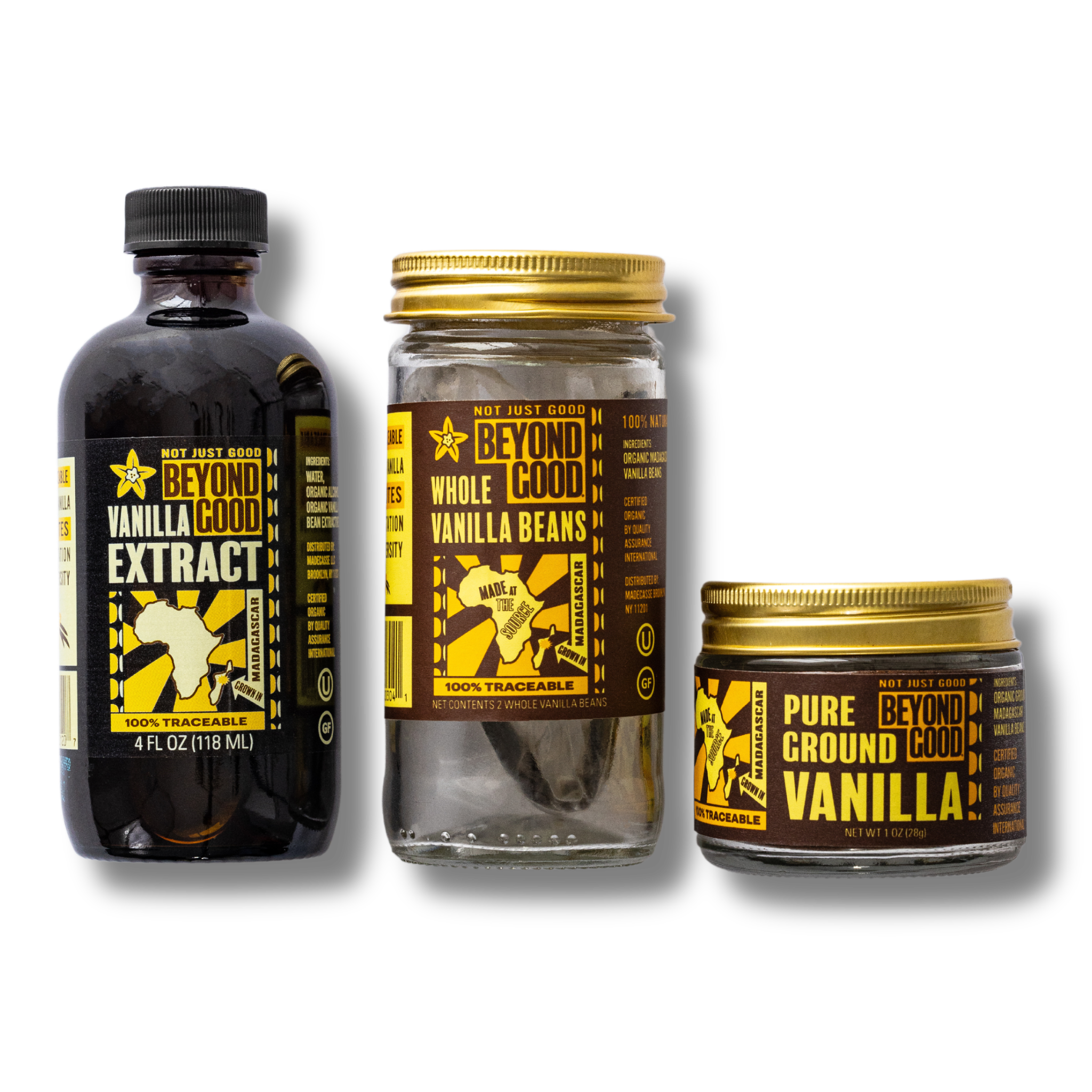
But not all vanilla is created for the same job. At Beyond Good, we make three types of vanilla: Pure Madagascar Vanilla Extract, Pure Ground Madagascar Vanilla Powder and Madagascar Vanilla Beans. They all start with the same organic-certified vanilla beans, but each one brings something different to the, erm, table!
Here’s how to know which one to reach for:
Pure Madagascar Vanilla Extract

The classic. We make our Pure Madagascar Vanilla Extract by steeping whole Bourbon vanilla beans in water and alcohol so they have 60% more flavor than the #1 grocery brand. It’s the easy, go-to option when you want vanilla to disappear into a recipe while leaving that creamy, warm vanilla flavor behind.
Use it for:
- Baked goods like cookies, cakes, brownies - the batter traps vanilla extract’s delicate aroma as it bakes. Anywhere you’re already adding a little liquid, extract is an easy fit.
- Cooked sweets like fudge, caramel BUT stir it in after the mixture has stopped boiling. Less time over high heat means more of that beautiful vanilla aroma reaches your taste buds.
Try it in:
Pure Ground Madagascar Vanilla

This is where things get interesting! We take whole Madagascar vanilla beans, sun-dry them and grind the entire pod into a fine powder - nothing added - no sugar, no fillers. Just vanilla. Because it’s dry, you can use it anywhere you don’t want to add extra liquid. It’s also perfect for sprinkling and dusting.
Use it for:
- Pretty much anything - yes, really anything.
- Raw and no-bake recipes: stir into yogurt, smoothies, protein balls, coffees and matcha.
- Baked goods: sprinkle straight into batter or dough
- Savory dishes: it’s a spice, so treat it like one and use it on roasted vegetables, spice rubs, or barbecue meats.
Try it in:
- Vanilla Cardamom Roasted Carrot Salad
- Brazilian Vanilla Limeade
- Creamy Pepper Steak with Vanilla Rub
Madagascar Vanilla Beans

The OG. There’s something special about using a whole vanilla bean. You split it open, scrape out those tiny glossy black seeds, and suddenly you’re reminded that vanilla comes from an orchid. Beyond Good’s vanilla beans are hand-harvested and cured using the traditional Bourbon method, weeks of blanching, sweating, and sun-drying that slowly develop flavor and aroma in what starts as an essentially odorless green pod. Sold whole and untouched by extraction or grinding, so nothing's been taken out of it.
And then there’s the moisture. Our beans contain 25–30% moisture, compared with around 10–15% in the representative vanilla beans we’ve compared them with. That extra moisture keeps our beans plump, soft and pliable instead of dry and brittle, so you can actually split them, scrape them and use them in your kitchen. Because what good is a vanilla bean if it’s too brittle to use?
Our beans are also long, averaging 15–17 cm, and sold whole, so nothing has been extracted or ground away before it reaches your kitchen.
Use the seeds anywhere you want those iconic black flecks, but don’t throw away the pod - add it to a jar of sugar, a pot of cream or yoghurt or a bottle of alcohol and let it infuse. A vanilla pod can keep giving long after you’ve scraped out the seeds.
Use it for:
- Custards, homemade ice cream, crème brûlée, whipped cream - light colours that show off the little black flecks.
- Vanilla sugar - bury a spent or fresh pod in a jar of sugar and let it infuse over a few weeks.
- Infusions and extracts - split and steep in vodka or bourbon to make a special tipple.
- Vanilla syrup - for adding layered flavor to your coffees, drinks and cocktails
And please don't wait for a ‘special’ day. Vanilla beans are meant to be used!
Try it in these recipes:
So, then what’s the difference between vanilla extract, powder and beans?
They all bring vanilla to the party. They just arrive at different times.
Yes, all three come from the same vanilla bean, so any one can stand in for another. The results won't be identical, though.
Extract is liquid, easy to blend and perfect for baking and cooked sweets but it should be in something that’s heated.
Pure Ground Vanilla is dry and concentrated, so you can use it without adding liquid. It’s the one to reach for when you want to sprinkle, stir or rub vanilla into something. When in doubt, use this.
Whole vanilla beans give you the full sensory experience: the aroma, the seeds, the texture and the iconic vanilla ‘look’. Each one does something the others can't.
Think of it this way:
| Vanilla Type | What is it? | Flavor Notes | Best For | Why Reach for it? |
| Pure Madagascar Vanilla Extract | Vanilla infused in liquid | Creamy, warm complexity and a hint of dried fruit |
Cookies, cakes and anything being baked in the oven or heated.
TIP: Extract works best when the alcohol is baked off. |
Easy to blend in |
| Pure Ground Madagascar Vanilla | Whole dried vanilla pod - ground | Bold, deep, woody depth + sweetness with notes of almond | Baking, drinks, breakfast, savory dishes | When in doubt, use this. Best all-rounder! |
| Madagascar Vanilla Beans | Whole cured vanilla pod | Floral notes, clean, delicate vanilla flavor and slight crunch from the seeds | Custards, ice cream and set desserts | Maximum vanilla experience |
Frequently Asked Questions
Can you substitute one type of vanilla for another?
Yes, but the results won’t be exactly the same
Here’s the easy swap:
1 Tbsp extract = 1½ tsp Pure Ground Vanilla.
But if a recipe calls for a whole vanilla bean, we’d stand our ground and say use the whole bean. Some things are worth doing properly.
Why settle for one?
You don’t need to pick a favorite - Beyond Good’s Madagascar Vanilla Lover's puts all three types together so you can taste the difference, experiment with each one and figure out which vanilla belongs in which corner of your kitchen because vanilla isn’t plain - you’ve just been thinking about it that way.